Ngatu: The Sacred Bark Cloth That Tells Tonga's Story — and How to Bring One Home
Ngatu: The Sacred Bark Cloth That Tells Tonga's Story — and How to Bring One Home
Most travelers come home from the Pacific with a fridge magnet or a woven bracelet. A few come home with something that stops visitors mid-sentence the moment it hits the wall. If you spend any real time in Tonga, there's a good chance that something is a piece of ngatu — the richly patterned bark cloth that has been woven into Tongan identity, literally and figuratively, for as long as anyone can remember.
This isn't just a pretty souvenir. Ngatu is a living cultural document. It shows up at royal ceremonies and village funerals alike. It wraps newborns and covers the deceased. It gets presented to heads of state and handed across families at weddings. Understanding what you're actually looking at — and buying — makes all the difference between picking up a decorative item and taking home something genuinely meaningful.
What Is Ngatu, Exactly?
Ngatu (pronounced roughly ngah-too) is a type of tapa cloth, a bark cloth tradition found across Polynesia, Melanesia, and parts of Micronesia. What makes Tongan ngatu distinct is its scale, its geometric precision, and the social ritual wrapped around its creation.
The raw material comes from the paper mulberry tree, known locally as hiapo. Young branches are harvested, the outer bark stripped away, and the soft inner bark soaked and beaten — sometimes for hours — with a wooden mallet called an ike. Repeated pounding stretches and thins the bark into sheets, which are then dried, layered, and pressed together with a natural starch to create larger panels. The result is a cream-colored material that's softer than you'd expect, with a faint texture that holds dye beautifully.
The painting comes next. Traditional designs, called kupesi, are carved into relief tablets made from pandanus leaves or coconut husk. Women — and it is almost always women who do this work — lay the tapa over these tablets and rub natural pigments across the surface, transferring the pattern in a process a little like brass rubbing. The two main dyes are a reddish-brown made from a plant called koka and a deep black from candlenut soot. Freehand details are often added afterward with a fine brush or cloth.
The patterns aren't random. Many designs have been passed down through generations within specific family lines, and reading them is something like reading a family crest. Geometric motifs carry meaning — some reference the natural world, others are tied to rank and lineage. The most elaborate pieces can take weeks or months to complete.
Why It Matters So Much
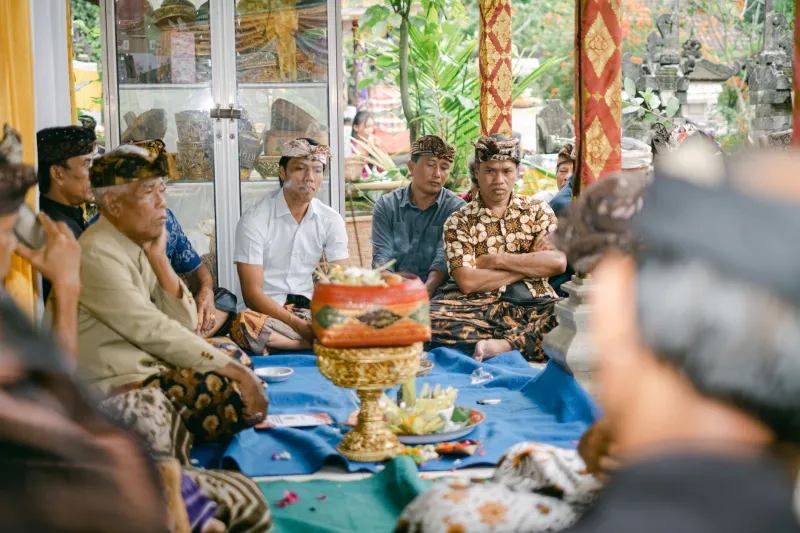
In Tonga, ngatu isn't decorative — it's functional in the deepest cultural sense. At a kātoanga (celebration), rolls of ngatu are presented as gifts of the highest order. When a Tongan noble or member of the royal family is involved, the quantity and quality of ngatu on display signals the social standing and generosity of the presenting family.
At funerals, ngatu is draped over the body and distributed among mourners. At weddings, it changes hands between families as a marker of respect and alliance. Even in the church — a central institution in Tongan life — ngatu makes appearances during significant occasions. The cloth isn't just cloth. It's currency, it's language, it's memory made tangible.
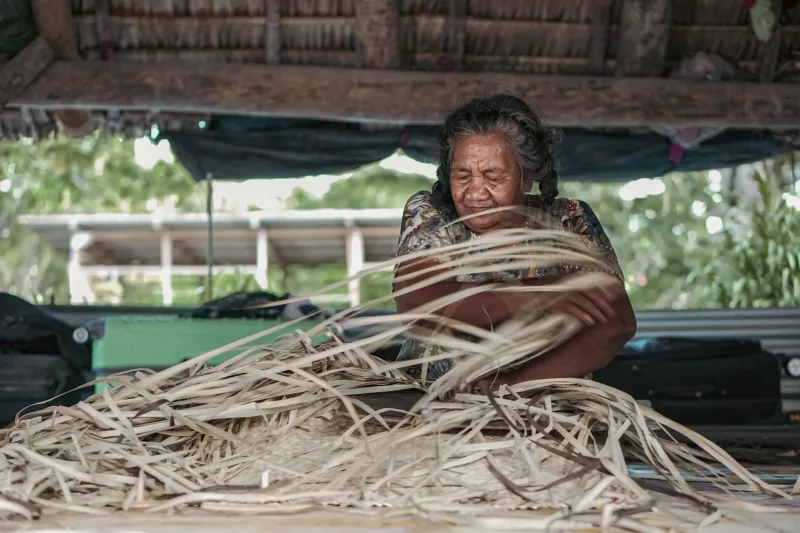
For women in particular, the ability to make ngatu has historically been tied to social status and community belonging. The production of ngatu is a communal act — women gather in groups called kautaha, working together over several days, talking, singing, and passing knowledge across generations. When you buy a piece of ngatu, you're buying something that emerged from that circle.
Where to See It Being Made
The best place to observe ngatu production firsthand is in the villages of the main island of Tongatapu, particularly around the areas of Lapaha, Nukuleka, and Kolovai. The village of Lapaha, near the ancient royal tombs at Mu'a, has a particularly strong tradition of tapa-making, and it's not unusual to encounter women working outdoors under shade trees if you visit during the week.
Several community-based tourism initiatives now offer structured workshops where visitors can try their hand at the beating and rubbing process. These are worth seeking out — not just for the experience, but because the fees go directly to the women running them. Your hotel or guesthouse in Nuku'alofa can usually point you toward current options, and the Tonga Visitors Bureau (near the waterfront in the capital) keeps an updated list of cultural experiences.
If you're visiting during a major national event — Constitution Day in November, for example, or the King's birthday celebrations — you may encounter large-scale public displays of ngatu being presented as part of official ceremonies. These are extraordinary to witness and completely open to respectful observers.
Buying Ngatu: What to Know Before You Spend
Ngatu is sold in a few different forms. Small decorative pieces, sometimes framed or mounted, are widely available at the Talamahu Market in Nuku'alofa and through craft shops near the waterfront. These are genuine handmade items and make excellent gifts — accessible in size and price, and easy to pack.
Larger ceremonial-grade pieces — the kind used at actual events — are less commonly sold commercially, but they do exist. If you're serious about acquiring something significant, ask at the market whether you can be connected directly with a maker. Buying directly from the woman or family who created the piece is not only more ethical, it usually means you'll get the story behind the specific design, which is half the value.
A few things to keep in mind:
- Ask about the design. A reputable seller will be able to tell you something about the pattern's origin or meaning. If they can't, that's worth noting.
- Size affects price significantly. Even a modest piece can run $40–$80 USD; larger ceremonial rolls can cost several hundred. That's fair for the labor involved.
- Condition matters for transport. Ngatu is surprisingly durable when dry, but it doesn't love humidity or being tightly folded for extended periods. Ask the seller how to roll and store it for the flight home.
- Customs is generally not an issue. Ngatu is a plant-based textile, and US Customs and Border Protection doesn't typically flag it, but declare it on your form anyway. If you're unsure, the USDA's website has current guidelines on bringing plant materials into the US.
Once you're home, ngatu looks stunning framed under glass or hung directly on a wall. Interior designers in the US have started taking notice — the geometric patterns work surprisingly well in modern spaces — but the piece hits differently when you know the context.
The Bigger Picture
There's a version of travel where you pass through a place and collect objects. And then there's the version where you slow down long enough to understand what those objects are actually saying. Ngatu is an invitation to the second kind of trip.
Tonga is a small kingdom with a long memory. The women who make ngatu are not performing a quaint tradition for tourists — they're continuing something that has mattered deeply to their families and communities for generations. Engaging with that honestly, spending your dollars in ways that reach the makers directly, and taking the time to learn even a little of the story — that's what makes the difference between a souvenir and something worth keeping.