Kava Circles, Royal Reverence, and the Quiet of Sunday: What Every First-Timer Should Know Before Landing in Tonga
There's a moment that catches almost every American traveler off guard somewhere in their first 48 hours in Tonga. Maybe it's stepping off the ferry on a Sunday to find the waterfront completely still — no shops open, no music drifting from restaurants, no tuk-tuks circling for fares. Or maybe it's being handed a coconut shell of kava and realizing you have absolutely no idea what's expected of you next. These aren't inconveniences. They're invitations — into one of the most culturally intact societies in the entire Pacific.
Tonga has never been colonized. That single fact shapes everything. The kingdom maintains its own monarchy, its own social hierarchy, and a set of living traditions that have adapted to the modern world without dissolving into it. For travelers willing to show up with curiosity rather than assumptions, that depth of culture is the whole trip.
Here's what you actually need to know.
Sunday Is Sacred — and That's Not an Exaggeration
If there's one thing that surprises American visitors more than anything else, it's how seriously Tonga observes the Sabbath. The country's constitution actually prohibits commerce and labor on Sundays, and while enforcement has softened slightly over the years, the spirit of that law is very much alive in daily practice.
Most shops, restaurants, and tour operators close entirely. Public beaches may be quiet or even off-limits depending on the community. Loud music, recreational watersports, and general tourist activity are considered disrespectful — and locals will notice.
But here's the thing: Sunday in Tonga is genuinely beautiful if you lean into it. Churches fill with some of the most extraordinary choral singing you'll ever hear, and visitors are almost always warmly welcomed to attend a service. The harmonies are rich, the congregations are dressed immaculately, and the whole experience carries a weight that's hard to put into words. Plan to go. Dress modestly — that means covered shoulders and knees for everyone — and arrive a few minutes early.
Practically speaking, stock up on food and water on Saturday evening. Build Sunday into your itinerary as a slow day. You'll come out of it feeling like you actually experienced Tonga rather than just passing through it.
The Kava Circle: Ritual, Relaxation, and the Right Way to Participate
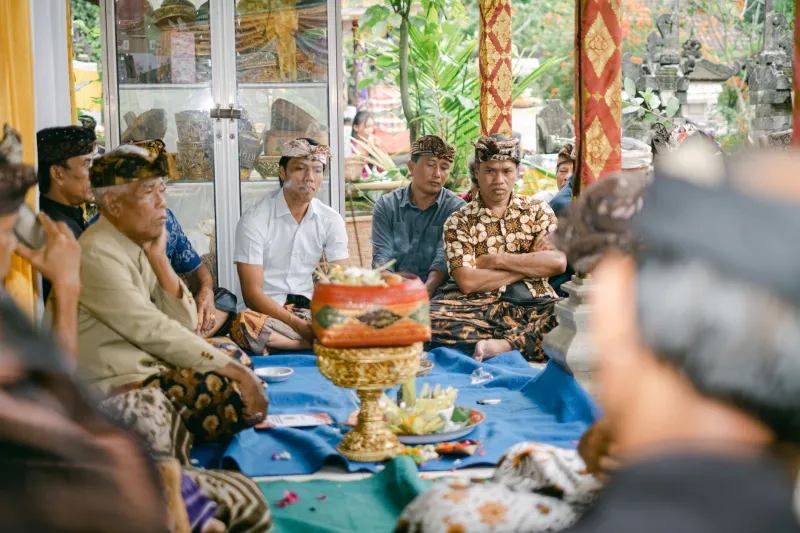
Kava — a mildly sedative drink brewed from the root of the Piper methysticum plant — sits at the center of Tongan social life in a way that's genuinely hard to overstate. It's consumed at celebrations, community gatherings, political meetings, and casual evenings with neighbors. Being invited to a kava circle is one of the most authentic experiences Tonga offers, and it's worth knowing the etiquette before you find yourself cross-legged on a woven mat.
The drink itself tastes earthy, slightly bitter, and a little like muddy water — but in a good way, once you adjust. It's served in a half coconut shell called a bilo, passed from a central bowl by a designated server. When you're offered the bilo, clap once with cupped hands, accept the shell with both hands, drink it in one go if you can, return the shell, and clap three more times. That sequence signals respect and participation.
Don't bring alcohol to a kava gathering. Don't sit with your feet pointing at the kava bowl or at senior members of the group — feet-forward is considered disrespectful in Tongan culture generally, not just in kava circles. And don't rush. Kava sessions can go for hours, and the whole point is the conversation, the companionship, and the gradual unwinding of the evening. Embrace it.
Understanding the Social Hierarchy — Including the Royal Family
Tonga operates on a clearly defined social structure, and the royal family sits at the top of it in a way that carries genuine cultural weight — not just ceremonial significance. King Tupou VI is the reigning monarch, and the royal family commands deep, sincere respect from Tongan society.
As a visitor, you won't need to navigate formal protocols around royalty in most situations. But a few things are worth knowing. Photographs of the royal family are displayed prominently in homes, businesses, and public spaces — treat these with the same respect you'd extend to religious imagery in a church. If you encounter a member of the royal family or a high-ranking chief in any setting, defer to local cues about how to behave.
More broadly, Tongan society places enormous value on faka'apa'apa — a concept that roughly translates to showing respect and maintaining appropriate deference in social situations. This plays out in everything from how you speak to elders to where you position yourself physically in a group setting. You don't need to master the nuances overnight, but showing genuine interest in getting it right goes a long way.
Dress, Modesty, and Reading the Room
Tonga is a conservative society by Western standards, and that shows up most visibly in how people dress. Swimwear stays on the beach. In villages, markets, and churches, both men and women are expected to cover up — loose pants or a skirt below the knee, shoulders covered. Women wearing the traditional ta'ovala (a woven mat worn around the waist) will notice that Tongan women often wear them as a mark of respect in formal settings.
You don't have to dress like a local to show respect, but you do need to read the context. Strolling through a village in a bikini top isn't just a fashion choice here — it reads as a lack of awareness, and locals will notice even if they're too polite to say anything directly.
The Real Reward of Showing Up Prepared
None of this is meant to make Tonga sound intimidating — it's one of the warmest, most welcoming places in the entire Pacific. Tongans are famously generous with their time and their culture, and they extend a great deal of grace to visitors who are clearly trying.
The difference between a good trip and a great one, though, usually comes down to preparation. Travelers who arrive knowing the rhythms of Sunday, who accept the kava shell with both hands and a clap, who dress for the context and slow down enough to actually connect — those are the people who come home talking about Tonga like it changed something in them.
That's the version of this trip worth planning for.