Still Booking Hawaii Every Year? Here Are 7 Reasons Tonga Deserves a Spot on Your Pacific Radar
Let's have an honest conversation about your vacation habits.
You love the Pacific. The blue water, the warm air, the way time slows down when you're on an island. Maybe you've done Oahu, Maui, the Big Island. Maybe you've even branched out to Fiji or Bora Bora. You've got the routine down: book the flight, find the resort, locate the swim-up bar.
But somewhere between your third plate of kalua pork and your seventh sunset photo, has a small voice asked whether there might be something a little more... off the beaten path?
That voice is right. And it's pointing toward Tonga.
The Kingdom of Tonga — a 170-island archipelago scattered across the South Pacific, roughly three hours from Fiji by air — is one of those destinations that seasoned Pacific travelers talk about in hushed, almost protective tones. It's real, it's raw, it's affordable, and it's nothing like the resort corridors you've been cycling through. Here are seven reasons it should be your next Pacific trip.
 Photo: Kingdom of Tonga, via www.dramabeans.com
1. It's the Only Pacific Nation That Was Never Colonized
This isn't just a historical footnote — it's the foundation of everything that makes Tonga feel different from every other island destination in the region.
While neighboring Pacific nations were carved up by British, French, American, and German colonial powers, Tonga maintained its sovereignty throughout the colonial era. King Tāufa'āhau Tupou I unified the islands in 1845 and navigated a series of treaties that preserved Tongan independence even as the rest of Oceania was being divided and redefined by outside forces. Tonga technically became a British protectorate in 1900, but retained its own monarchy, laws, and governance — and it's been a fully independent nation since 1970.
What this means for travelers is profound: Tongan culture, language, and social structures developed largely on their own terms. The traditions you encounter aren't reconstructed for tourists or preserved in a museum. They're living, practiced, and genuinely central to daily life in a way that's increasingly rare in the Pacific.
2. Ha'apai's Beaches Are the Real Deal
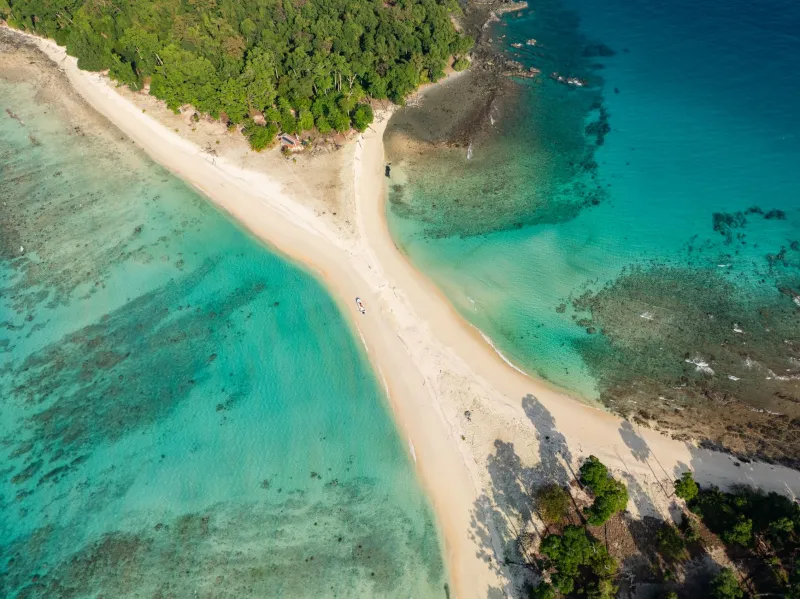
If someone showed you a photo of Ha'apai without telling you where it was, you might guess it was a CGI render from a screensaver. Powder-white sand, water that goes from turquoise to cobalt in the space of twenty feet, and the kind of silence that makes you check whether your ears are working.
The Ha'apai island group sits in the middle of the Tongan archipelago and remains one of the least-visited beach destinations in the entire Pacific. There are no cruise ship terminals, no all-inclusive resorts, no beach vendors hawking overpriced trinkets. What there is: unspoiled coral reefs, wild beaches you might have entirely to yourself, and small guesthouses run by Tongan families who are genuinely happy to see you.
For American travelers used to fighting for a patch of sand at Ka'anapali or Poipu, Ha'apai is a revelation.
3. The Locals Actually Want to Talk to You
This one's harder to quantify but impossible to ignore once you've experienced it. Tongans have a well-earned reputation for being among the warmest, most genuinely welcoming people in the Pacific — and unlike destinations where tourist-friendliness has become a performance, in Tonga it tends to feel completely authentic.
Tonga receives a fraction of the visitors that Hawaii or Fiji sees annually, which means locals haven't developed the quiet exhaustion that comes with mass tourism. Conversations happen naturally. You'll get invited to church (Sunday services are a genuine cultural experience and visitors are warmly welcomed). Someone will explain the significance of the tapa cloth hanging in their home. A fisherman will show you his catch.
These aren't staged cultural experiences. They're just Tuesday in Tonga.
4. Your Dollar Goes Significantly Further
Let's talk numbers. A beachfront bungalow in Maui that runs $600 a night has an equivalent in Tonga — a private beach fale with stunning views and meals included — for a fraction of that price. Mid-range guesthouse accommodation in Vava'u or Nuku'alofa typically runs $80–$150 USD per night. Restaurant meals are affordable even by Midwest standards. Tour operators charge prices that reflect a local economy, not a tourist premium.
This doesn't mean Tonga is a budget-backpacker destination (though it works for that too). It means your travel budget simply goes further — more days, better experiences, and less of that creeping financial anxiety that can shadow an expensive resort vacation.
5. The Marine Environment Is Extraordinary
Tonga sits within the Coral Triangle's outer edge, and its waters support an ecosystem that would make any marine biologist emotional. The reefs around Ha'apai and Vava'u are among the healthiest in the Pacific, with visibility often exceeding 100 feet and fish populations that haven't been hammered by decades of intensive dive tourism.
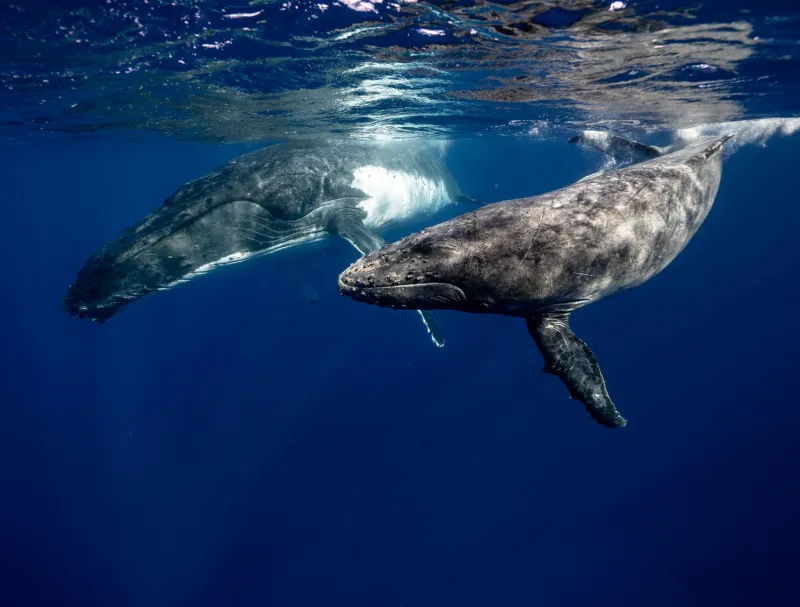
And then there are the humpback whales. Every year from July through October, thousands of humpbacks migrate to Tongan waters to breed and calve, and Tonga is one of the few places on Earth where swimming with these animals is legally permitted under a government permit system. It's the kind of encounter that makes Hawaii's whale-watching boat tours feel like a very long drive for a distant glimpse.
6. The Culture Is Layered and Genuinely Fascinating
Tonga's royal monarchy is one of the oldest continuous royal lineages in the Pacific world. The current king, Tupou VI, leads a constitutional monarchy that still holds significant cultural weight in Tongan society. Royal ceremonies, traditional kava rituals, and the ancient art of ngatu (tapa cloth) making are all active parts of Tongan life — not historical reenactments.
Visiting during a cultural event or national celebration can offer a window into Polynesian traditions that have been maintained with remarkable continuity. The Heilala Festival in July, which coincides with the king's birthday celebrations, is one of the most vibrant cultural events in the Pacific and a genuinely special time to visit.
7. The Crowds Simply Aren't There
Tonga received roughly 50,000–60,000 visitors in a typical pre-pandemic year. Maui alone gets around three million. Even Fiji, which many Americans consider a more adventurous choice than Hawaii, draws over 900,000 visitors annually.
This isn't a knock on popular destinations — there are good reasons people love them. But if you've ever arrived at a "hidden gem" beach in Hawaii and found 200 other people with the same Yelp review, you understand the appeal of going somewhere the crowds haven't fully discovered yet.
Tonga is genuinely, not performatively, off the beaten path. And the window to experience it that way — before Instagram algorithms and travel influencers fully catch on — is real.
So, How Do You Get There?
From the US West Coast, the most common routing goes through Fiji (Nadi) or Auckland, with connecting flights to Fua'amotu International Airport near Nuku'alofa. From there, domestic flights on Real Tonga Airlines connect to the outer island groups. Total travel time from Los Angeles runs roughly 18–22 hours with connections.
It's not a quick hop, and that's actually part of the point. The slight effort of getting to Tonga is part of what keeps it the way it is.
Hawaii will still be there when you get back. And honestly, it'll feel a little different after you've seen what a Pacific island looks like when the rest of the world hasn't quite caught up yet.