Face to Face with a Humpback Whale: Why Tonga Is the World's Greatest Ocean Adventure You Haven't Booked Yet
Face to Face with a Humpback Whale: Why Tonga Is the World's Greatest Ocean Adventure You Haven't Booked Yet
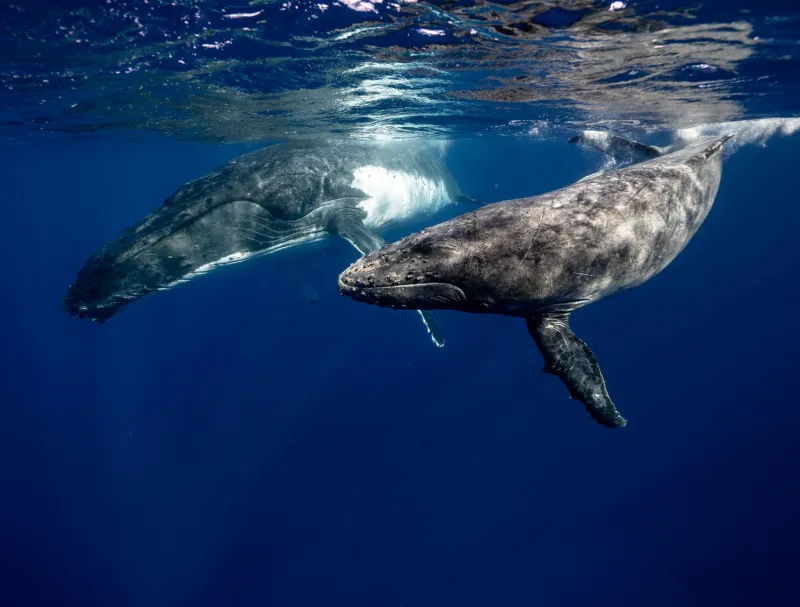
There's a moment — and every single person who has experienced it will tell you the same thing — when the whale turns. You're floating in 85-degree water somewhere in the Vava'u island group, your heart hammering against your snorkel vest, and this impossibly massive animal just... rotates its body and looks at you. One enormous eye, dark and ancient and curious, fixed directly on yours.
That's the moment people describe when they come back from Tonga. Not the food, not the resorts, not the beaches (though all of those are genuinely great). The moment the whale looked back.
Tonga is one of the only countries on Earth where swimming with humpback whales in the open ocean is not just possible — it's legal, regulated, and accessible to regular travelers who don't have a marine biology degree or a trust fund. Yet somehow, most Americans have never even considered it as a destination. If you're sitting on a bucket list that still has "swim with dolphins" on it, it's time to upgrade.
Why Tonga? The Science and the Law
Every year between July and October, thousands of humpback whales migrate from Antarctic feeding grounds to the warm, sheltered waters of Tonga to breed and give birth. The Ha'apai and Vava'u island groups in particular serve as a kind of nursery and courtship arena for these animals — calm, protected lagoons surrounded by volcanic islands where mothers nurse calves and males compete in spectacular surface displays.
What makes Tonga uniquely special is the legal framework. The Tongan government has developed a permit system that allows licensed tour operators to take small groups of swimmers into the water with whales under strict guidelines. Operators must hold government-issued permits, group sizes in the water are capped (typically four swimmers plus a guide at a time), and there are clear rules about approach distances and behavior. No scuba gear is allowed — this is a snorkel-only experience, which actually keeps things quieter and less intrusive for the animals.
The result is an encounter that feels genuinely wild. These aren't captive animals or habituated performers. They're free, massive, and entirely in control of the interaction — which makes every encounter feel like a privilege rather than a transaction.
What the Experience Actually Feels Like
Let's be real about the logistics first: you're on a boat, usually a converted dive vessel or a dedicated whale-watching catamaran, and you spend the morning scanning the water for blows. When your guide spots a whale — or a mother-calf pair, or a competitive heat run with multiple males — the boat moves into position carefully and the first group of four slips into the water as quietly as possible.
The guide leads you toward the whale at a respectful distance, then you all stop and float. And wait.
Sometimes the whale moves away. That's completely normal and entirely okay — the animal's comfort always comes first, and good operators will tell you this upfront. But often, especially with curious juveniles or resting mothers, the whale stays. Or approaches. And when a 45-foot animal decides it wants to get a closer look at you, the combination of awe, exhilaration, and primal fear is unlike anything else in travel.
The sounds alone are worth the trip. Humpbacks vocalize constantly during breeding season, and underwater you can feel the song in your chest before you even hear it clearly. It's a physical sensation — a low, resonant frequency that vibrates through the water and through you.
Most half-day tours include two to three separate water entries, and a full day on the water might yield six or more. Not every entry results in a prolonged encounter, but experienced operators in Vava'u have remarkably high success rates during peak season.
When to Go and How to Book from the US
The window is July through October, with August and September considered peak months for whale activity. July can be excellent if you catch the early arrivals, and October sees the last of the season before the whales head south again.
For Americans, the most practical routing goes through either Los Angeles or San Francisco, connecting through Fiji (Nadi) or Auckland, New Zealand, before landing at Fua'amotu International Airport near Nuku'alofa, the capital. From Nuku'alofa, domestic flights on Real Tonga Airlines connect to Vava'u (Lupepau'u Airport) in about an hour. Budget roughly 20-24 hours of total travel time from the US West Coast, including layovers.
 Photo: Fua'amotu International Airport, via www.santeplusmag.com
When it comes to booking a swim tour, don't cut corners. Look for operators who hold current Tongan government whale-swimming permits, maintain small group sizes, and have trained marine naturalists on board. Several well-regarded operators in Vava'u have been running these tours for 15+ years and have strong track records with US travelers. Many offer multi-day liveaboard packages that combine whale swimming with snorkeling on coral reefs, sea kayaking, and exploration of the islands — which is genuinely the best way to experience the region.
Book as early as possible. August in particular fills up fast, and the best operators often sell out their peak-season slots by February or March. Many US-based adventure travel companies now offer packaged Tonga whale-swimming trips that handle flights, accommodation, and tour coordination — a convenient option if you'd rather not piece it together yourself.
Practical Tips Before You Go
Fitness level: You don't need to be an Olympic swimmer, but basic comfort in open water with a snorkel and mask is essential. If you've snorkeled in Hawaii or the Caribbean, you're prepared.
What to pack: A quality snorkel set (your own is better than rental), a 3mm wetsuit (the water is warm but you'll be in it for stretches), reef-safe sunscreen, and a GoPro-style camera if you want footage. Underwater photography is generally permitted, but flash photography near the whales is not.
Accommodation: Vava'u's main town of Neiafu has a solid range of guesthouses, small resorts, and yacht-friendly lodges. It's charming, low-key, and nothing like a resort strip — which is kind of the point.
Cost: Expect to pay $150–$250 USD per person for a quality half-day whale swim tour. Multi-day liveaboard packages run considerably more but offer the most immersive experience.
The whales don't care how many Instagram followers you have or how many stamps are in your passport. They're just there, living their enormous lives in the blue Pacific, occasionally curious about the small humans floating nearby. Getting in the water with them is one of those experiences that genuinely reframes your sense of scale — of your own place in the natural world.
Tonga's been quietly offering this to travelers for decades. It's about time more Americans showed up.