Closed for the Kingdom: How to Fall in Love with Tonga's Untouchable Sunday
Closed for the Kingdom: How to Fall in Love with Tonga's Untouchable Sunday
You land in Nuku'alofa on a Saturday night, jet-lagged and already making mental lists. Coffee shop in the morning. Maybe a quick run to the market. Grab snacks for the day. Then Sunday arrives, and the whole kingdom exhales — and you realize none of those plans are happening.
Shops are shuttered. Taxis are scarce. The beach, usually dotted with activity, sits in an almost eerie calm. If you came expecting the usual Pacific island tourist hustle, Sunday in Tonga is going to stop you cold.
But here's the thing: that stillness is the point. And once you stop fighting it, it has a way of becoming the best thing that happens to you on the entire trip.
Why Sunday Is Different Here — Like, Really Different
Tonga is one of the last places on earth where the Sabbath is written into the national character. The country's constitution — shaped heavily by Christian missionaries who arrived in the 1800s — prohibits most commercial activity on Sundays. That's not just a cultural suggestion. It's law. No stores, no markets, no organized tours, no sports. Even the airport operates on a skeleton schedule.
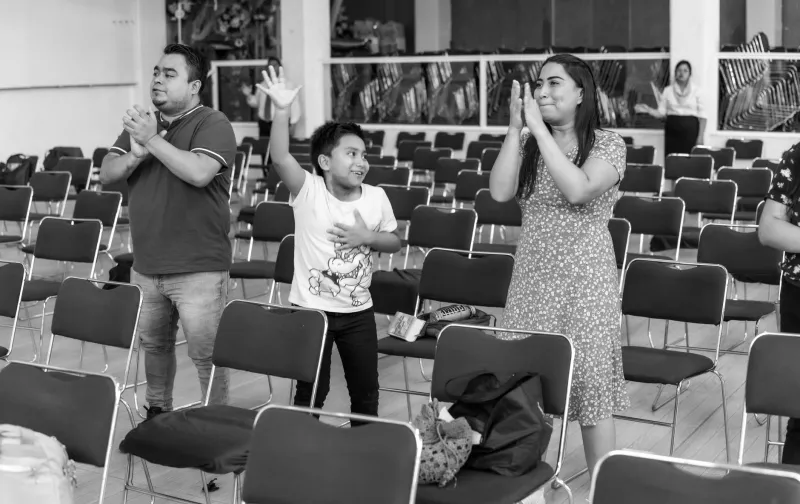
About 97% of Tongans identify as Christian, spread across Methodist, Catholic, Free Wesleyan, Mormon, and other denominations. Church isn't something people fit into their Sunday — Sunday is built entirely around church. Services run long, choirs are extraordinary, and afterward, families gather for feasts that can stretch through the afternoon.
For an American used to brunch spots opening at 9 and grocery stores running around the clock, this is a genuine culture shift. But it's also a rare window into a way of life that has quietly vanished almost everywhere else on earth.
Going to Church: You're More Welcome Than You Think
Many churches in Tonga actively welcome foreign visitors, and attending a Sunday service — even if you're not religious — is widely considered one of the most authentic experiences the country offers.
The Free Wesleyan Church of Tonga, the country's largest denomination, holds services in Nuku'alofa and across the islands that are known for their powerful choral singing. Tongan hymns sung by a full congregation are genuinely spine-tingling — this isn't background music, it's full-throated, harmonized, and deeply felt.
A few practical notes if you go:
- Dress conservatively. Women should wear skirts or dresses that cover the knees; men should wear long pants and a collared shirt. Both should have shoulders covered. Tongans take church attire seriously, and dressing respectfully signals that you do too.
- Arrive a few minutes early. Services can fill up quickly, and slipping in late is awkward in any culture.
- Bring a small contribution if a collection is taken — it's not required, but it's a gracious gesture.
- Don't photograph inside without asking. Outside the church before or after is usually fine, but use your judgment.
Services typically last one to two hours. Afterward, don't rush off. Lingering near the entrance often leads to an invitation — and those invitations are how Sunday really opens up.
The Umu: A Feast Worth Planning Your Week Around
If a Tongan family invites you to Sunday lunch, say yes immediately. Don't check your schedule. Just say yes.
The traditional Sunday feast centers on the umu — an underground earth oven that functions something like a slow cooker, except the results are incomparably better. Rocks are heated over a fire, food is wrapped in banana leaves, and everything goes underground together for several hours. The result: pork, taro, sweet potato, fish, and sometimes whole chickens, all slow-cooked to a tenderness that's difficult to describe and impossible to replicate in a conventional kitchen.
The spread is communal and generous in a way that can feel almost overwhelming. Tongan hospitality operates on the principle that guests should leave with full stomachs and, ideally, leftovers. Refusing food is considered rude; eating enthusiastically is a form of gratitude.
Some guesthouses and small hotels on the islands offer Sunday umu lunches specifically for travelers. If yours doesn't, ask around — the staff may have family hosting one and might extend an invitation. Community-level tourism experiences like this aren't always formally advertised, but they're often available if you simply ask.
How to Plan the Rest of Your Itinerary Around It
Sunday in Tonga rewards preparation. Go in with a plan, and the day feels luxurious. Go in with a full to-do list and you'll spend the morning frustrated.
Stock up on Saturday. Any groceries, snacks, or supplies you need should be purchased the day before. Most markets close early Saturday evening in anticipation of Sunday.
Book transport in advance. If you need to get somewhere on Sunday — a ferry, a pickup from your guesthouse — arrange it before Saturday night. Don't assume taxis will be easy to flag down.
Embrace the slower pace for beach time. Beaches in Tonga are beautifully calm on Sundays, but keep in mind that swimming near villages on the Sabbath can be seen as disrespectful in some communities. Ask your host or accommodation about local customs before spreading out your towel.
Use the quiet for reflection and journaling. It sounds cliché until you're actually sitting on a veranda in Tonga with no Wi-Fi, no agenda, and the sound of a distant choir drifting across the street. That's a moment you'll remember long after you've forgotten which beach you snorkeled.
What Sunday Actually Feels Like
Here's what a well-spent Sunday in Tonga can look like, practically speaking:
You wake up to birdsong and the distant sound of bells. You put on your best clothes and walk to a nearby church, where you're ushered to a pew by someone who shakes your hand warmly and hands you a printed order of service. The choir begins, and you immediately understand why people describe it as transcendent. An hour later, you're standing outside in the sun when a woman in a bright dress asks if you've eaten yet.
You spend the next three hours at a long table under a shade cloth, eating food you've never tasted before, listening to a family laugh in a language you don't speak, and somehow feeling completely at home.
In the afternoon, you sit somewhere quiet and do absolutely nothing. No scrolling. No planning. Just the Pacific breeze and the realization that you haven't moved this slowly in years — and that it feels incredible.
The Bigger Picture
Tonga's Sunday isn't an inconvenience to be managed. It's an invitation to step outside the always-on rhythm that defines most American travel — and most American life. The kingdom essentially asks you to stop, once a week, and just be somewhere.
That's not a small thing. In a world where even remote destinations have been wired for constant stimulation, Tonga's Sunday stands apart. It's analog in the best possible sense: slow, intentional, rooted in something older and quieter than anything most of us encounter at home.
Plan around it. Lean into it. Let it be the day that resets everything else.
You might find, somewhere between the hymns and the umu and the long afternoon stillness, that it's the part of Tonga you'll spend the most time talking about when you get home.