Real Numbers, Real Tonga: How to Live Well in the Kingdom for $150 a Day or Less
Let's be honest about something: when most Americans picture a South Pacific getaway, they picture a resort bill that rivals a mortgage payment. Overwater bungalows, private transfers, curated snorkeling tours — it adds up fast, and it keeps a lot of people from ever booking the trip at all.
Tonga is different. Not because it's a budget destination in the hostel-and-instant-noodles sense, but because its tourism infrastructure is still small enough that the expensive, manufactured version of paradise hasn't fully taken over. Guesthouses run by local families sit right alongside the handful of resorts. Village markets feed locals and visitors alike. And some of the most memorable experiences here — watching the sunset from a coral-fringed beach, attending a Sunday church service, joining a kava circle — cost nothing at all.
Here's a clear-eyed breakdown of what $150 a day actually gets you in Tonga, and where you can push that number even lower.
What Does $150 a Day Actually Cover?
Think of your daily budget in four buckets: accommodation, food, transport, and activities. In Tonga, a comfortable, well-managed guesthouse on Tongatapu runs roughly $40–$70 per night for a private room with breakfast often included. On the smaller islands like Vava'u or Ha'apai, family-run guesthouses frequently come in at the lower end of that range — sometimes as low as $30 — and the hosts tend to be extraordinarily generous with local knowledge, packed lunches, and informal tours.
Resorts are a different story. Tonga's handful of higher-end properties can run $150–$300+ per night on their own, which obviously blows the daily budget in a single line item. They're lovely, but they're not necessary for a genuinely great trip.
Quick accommodation benchmark:
- Budget guesthouse (private room): $30–$55/night
- Mid-range guesthouse with meals: $55–$85/night
- Resort (for reference): $150–$300+/night
Eating Well Without Overspending
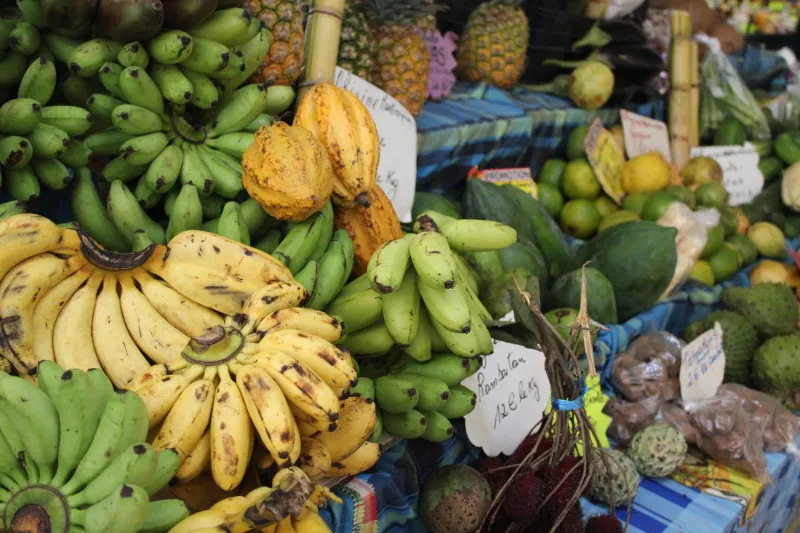
Food is where Tonga genuinely surprises budget-conscious travelers. The Talamahu Market in Nuku'alofa is your best friend — a bustling, colorful spread of fresh produce, cooked food stalls, and local snacks where a full, satisfying meal rarely costs more than $3–$5. Roasted breadfruit, lu sipi (taro leaves with lamb), ota ika (raw fish marinated in coconut cream and lime) — this is real Tongan cooking, and it costs a fraction of what you'd pay at a tourist-facing restaurant.
Speaking of restaurants: Tonga has them, and they're perfectly good. A sit-down lunch at a local café in Nuku'alofa typically runs $8–$15. Dinner at a nicer spot, $15–$30. If you're eating one market meal a day and cooking or snacking for another, $25–$35 per day on food is entirely realistic. Even eating out for every meal, $50/day keeps you well-fed.
Food budget range:
- Market meals + self-catering: $20–$30/day
- Mix of local restaurants and markets: $35–$50/day
- Dining out for every meal: $50–$70/day
Getting Around Without Draining Your Wallet
Transport is worth thinking about carefully because domestic flights between Tonga's island groups — Tongatapu, Vava'u, Ha'apai, and the Niuas — are the biggest single variable in your budget. Real Tonga Airlines operates these routes, and prices fluctuate. Book early and you can find one-way fares for $60–$90. Wait until the last minute and you might pay $150+ for the same seat.
The lesson: map out your island itinerary before you arrive and book domestic legs as soon as your international flights are confirmed. It's the single most effective money-saving move you can make for a multi-island trip.
Within islands, shared taxis and buses are cheap — $1–$3 for most local trips on Tongatapu. Renting a scooter or small car (roughly $35–$55/day) makes sense if you want flexibility, especially on Vava'u where the geography rewards exploration.
Activities: The Free Stuff Is Often the Best Stuff
This is where Tonga genuinely defies the expensive-Pacific-vacation script. A huge portion of what makes this country extraordinary costs nothing.
The blowholes at Mapu'a 'a Vaea on Tongatapu's southern coast? Free. The ancient coral limestone trilithon at Ha'amonga 'a Maui, one of the most mysterious archaeological sites in the Pacific? Free. Sunday church services, where Tongan choral harmony will stop you cold in your tracks? Free, and you're genuinely welcome as a respectful visitor. Snorkeling off the beach in Ha'apai, where the visibility is absurd and the reef fish are everywhere? Free, assuming you brought your own mask and fins (rent them for $10–$15/day if not).
Paid activities worth budgeting for:
- Whale-watching (Vava'u, July–October): $80–$120 per person for a half-day tour. This is the signature Tonga experience — swimming alongside humpback whales — and it's worth every cent. Timing your trip during whale season means you're paying for one of the world's great wildlife encounters, not a fabricated resort activity.
- Kayaking or sailing in Vava'u: $40–$80/day depending on operator and boat type.
- Cultural village tours: $15–$30, often including a traditional meal.
If you budget $30–$50/day for activities on average — with a couple of splurge days for whale-watching offset by free-activity days — you're well within reach.
Putting It All Together: A Sample Daily Budget
Here's what a realistic, comfortable day in Tonga looks like at different spend levels:
Lean day (~$80–$100): Guesthouse with breakfast included ($50) + market lunch and self-catered dinner ($20) + local transport ($5) + free beach or cultural site ($0) = ~$75–$85
Comfortable day (~$120–$140): Guesthouse ($60) + mix of restaurant and market meals ($40) + scooter rental ($40) + snorkeling or village tour ($30) = ~$130–$170 (scooter days push the total up — balance with free-activity days)
Splurge day (~$180–$220): Same guesthouse ($60) + nice dinner out ($35) + whale-watching tour ($100) + transport ($15) = ~$210 — still dramatically cheaper than a resort baseline
The pattern here is clear: lean days and splurge days average out comfortably under $150 across a full trip, especially if you're spending a week or more.
A Few More Tips Worth Knowing
Bring USD or AUD to exchange. The Tongan Pa'anga (TOP) isn't easily obtained outside Tonga. ATMs exist in Nuku'alofa but are limited elsewhere — carry enough cash when heading to outer islands.
Avoid the resort dining trap. If you're staying at a guesthouse, you're not locked into eating at a resort restaurant. But if you do splurge on a resort night, the food and drink markup is significant. Eat out or visit the market instead.
Whale-watching value window: July through early October is peak season for humpback whale encounters in Vava'u. Booking a reputable operator early in the season often gets you better pricing than waiting until August when demand peaks. The experience itself is legitimately world-class — budget travelers shouldn't skip it, just plan for it.
Talk to your guesthouse host. Seriously. Local hosts in Tonga are often fountains of free-activity recommendations — hidden beaches, family-run food stalls, community events — that never appear on any booking platform.
Tonga rewards travelers who show up curious and flexible. The budget math works out. The only thing left to do is book the flight.