A Woman Alone in the Kingdom: The Honest Guide to Solo Female Travel in Tonga
Let's skip the part where we hedge everything and say "just use your best judgment." You deserve something more useful than that.
Tonga is safe. It is also traditional. It is warm and communal and deeply family-oriented — and for an American woman traveling alone, those qualities create an experience that doesn't map neatly onto the solo travel templates you might be used to. This guide is about understanding what you're actually walking into, so you can walk in confidently.
What Solo Actually Means Here
In the United States, solo travel is a lifestyle choice that's been thoroughly romanticized — the lone woman with a backpack, finding herself, eating dinner alone by choice. Tonga doesn't really have a cultural framework for that. In a society built around family, community, and collective identity, the idea of being truly alone is somewhat foreign — and a little concerning to the people you'll meet.
This isn't a problem. It's actually a feature.
What tends to happen is that solo female travelers in Tonga stop being solo within about 48 hours. You get adopted. A guesthouse owner invites you to church. A woman at the market asks where you're from and, by the end of the conversation, has invited you to her cousin's house for dinner. A group of teenage girls wants to practice their English and ends up walking you to your next destination.
This is not unusual. This is Tuesday in Tonga.
The Cultural Context You Need to Know
Tonga is a conservative Christian society, and gender roles are more traditional than what most American women are used to. That said, Tongan women are not invisible or passive — they hold significant social power, particularly within the family structure. The mehekitanga (father's sister) holds one of the highest positions of respect in Tongan kinship. Women are not sidelined; they operate within a different system.
For visitors, this means a few practical things:
Dress modestly, especially outside resort areas. Covered shoulders and knees are the baseline. This isn't about restriction — it's about showing that you understand and respect local norms. Women who dress this way are treated with noticeably more warmth and taken more seriously. Pack a light wrap or a few longer skirts. You'll use them.
Sunday is sacred. If you're in Tonga on a Sunday, plan to slow way down. Most businesses close, and the day revolves around church and family. Attend a church service if you're invited — it's one of the most genuinely beautiful cultural experiences the islands offer, and women are welcomed warmly.
Kava circles are traditionally male spaces. You may be invited to observe, and in some more tourist-facing settings, visitors of any gender participate. But don't expect to just walk into a kava session. Let your host guide you on what's appropriate.
Navigating Social Spaces as a Woman Alone
Bars are rare in Tonga, and the nightlife scene that solo female travelers often use to meet other travelers in, say, Southeast Asia, largely doesn't exist here. That's actually fine — the social infrastructure just works differently.
Markets are your best friend. The Talamahu Market in Nuku'alofa is a hub of daily life and an easy place to strike up conversations with local women selling produce, crafts, and food. Come early, bring cash, and don't rush. The market is where friendships start.
Guesthouses run by local families (rather than international hotel chains) will almost always give you more access to community. Many are run by women, and those relationships can become the center of your entire trip. Ask your host for recommendations — she'll point you toward places that are appropriate, safe, and genuinely interesting.
If you're on the outer islands — Ha'apai or Vava'u — the communities are small enough that you'll be known within a day. That visibility is a safety net. People look out for guests.
The Sisterhood Part Is Real
Something that surprises a lot of American women traveling in Tonga: the female friendships they form are not superficial. There's a directness and warmth to how Tongan women engage with female visitors that feels different from the polite-but-distant interactions you might get in more tourist-saturated destinations.
Tongan women will ask you real questions — about your family, your plans, whether you're married, why you came alone. These aren't rude intrusions; they're genuine curiosity and an attempt to place you within a framework they understand. Answer honestly. Ask questions back. The conversations that follow are often the highlight of the trip.
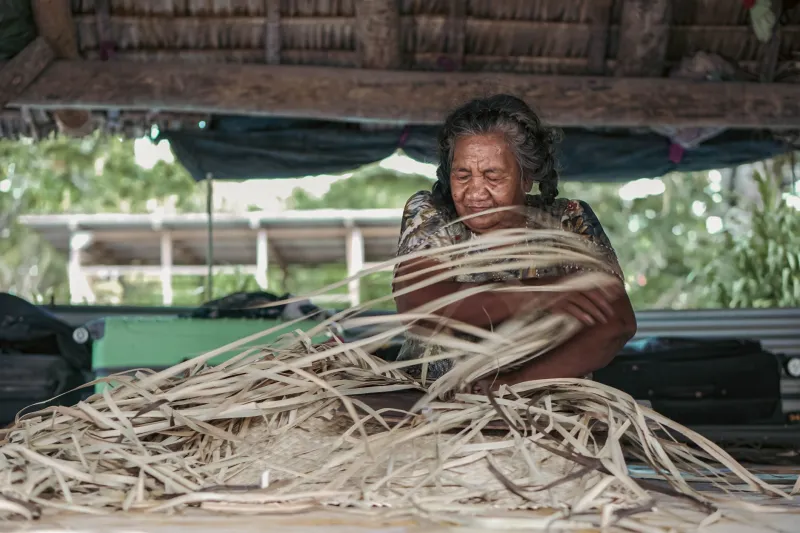
Several solo travelers we've spoken with described being brought into local women's groups, invited to help prepare food for community events, or simply sitting for hours in someone's home watching local life unfold. None of it was arranged through a tour company. It happened because they showed up open, dressed respectfully, and said yes when invited.
Practical Safety Notes
Tonga has a low violent crime rate by any global standard. Petty theft exists in Nuku'alofa, as it does in any capital city — keep your phone and valuables close in busy market areas. At night, stick to well-lit streets or take a taxi rather than walking unfamiliar roads alone.
Taxis are generally safe and inexpensive. Agree on the fare before you get in — meters aren't universal. Many drivers are happy to chat and will give you useful local information if you're friendly.
For medical situations: the main hospital is in Nuku'alofa, and care on the outer islands is limited. Make sure your travel insurance covers medical evacuation. This isn't Tonga-specific advice — it applies to any remote Pacific destination.
Trust your instincts. The same internal compass that keeps you safe at home works here. The difference is that the things that would raise red flags in an American city — a stranger inviting you to their home, someone following you down the street to continue a conversation — often mean something completely different in Tonga. Context matters. Read it carefully.
Why It's Worth It
There's a particular kind of travel that changes how you understand yourself — not because it was dangerous or extreme, but because it was deeply human. Tonga, for solo female travelers who go in with open eyes and genuine curiosity, tends to be that kind of trip.
You won't be alone for long. And that, it turns out, is exactly the point.