Stop Googling 'Best Time to Visit Tonga' — The Real Answer Depends on Who You Are
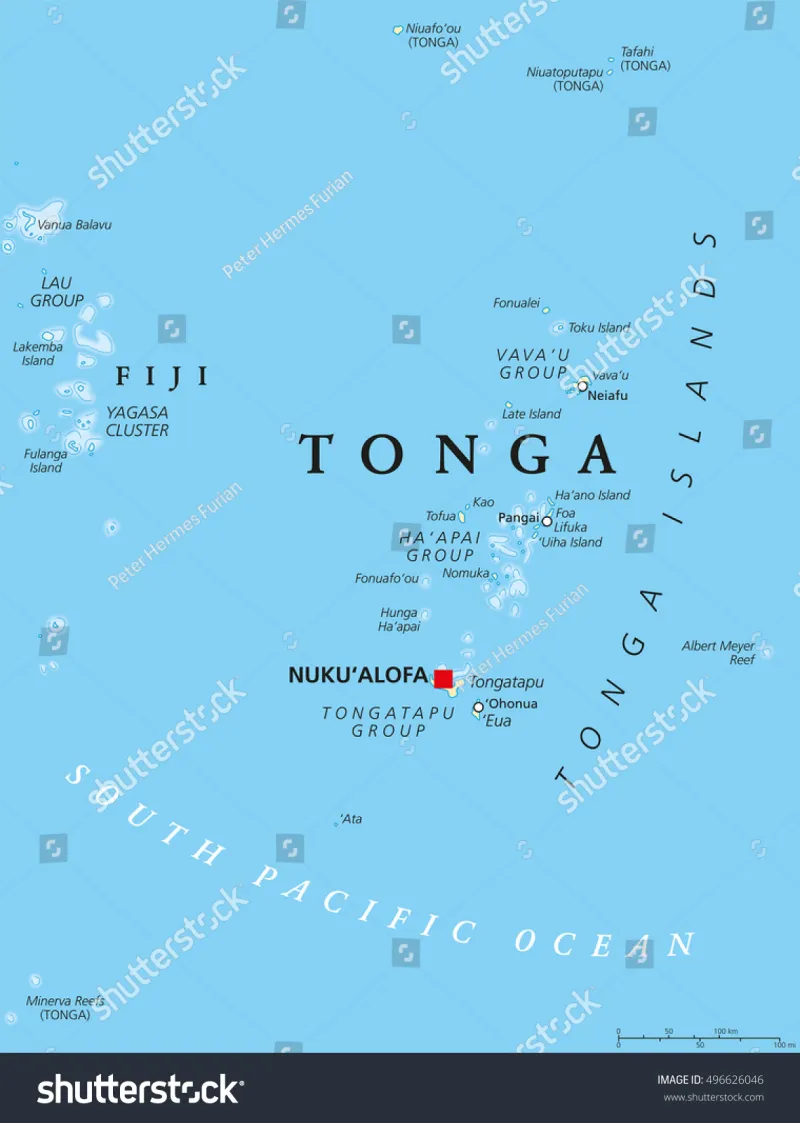
Photo: Tonga tropical island humpback whale season Pacific weather sunny ocean, via image.shutterstock.com
Type "best time to visit Tonga" into any search engine and you'll get roughly the same answer from every source: June through October, dry season, whale watching, perfect weather. Book it.
That answer isn't wrong. But it's incomplete in ways that actually matter — especially if you're planning from the US, working around a real budget, and trying to get more out of your trip than a highlight reel.
Tonga's climate, like its culture, rewards people who take the time to understand it. Here's a more honest breakdown.
The Basics: Tonga Has Two Seasons, Not One
Tonga sits in the South Pacific, roughly between 15 and 23 degrees south latitude. That means a tropical climate with two distinct seasonal personalities.
The dry season runs from approximately May through October. Temperatures are milder (think low-to-mid 70s°F), humidity drops noticeably, and rainfall is less frequent. This is when the trade winds blow steadily, the ocean is calmer for sailing and diving, and humpback whales arrive from Antarctica to breed and give birth in Tongan waters.
The wet season covers November through April. Temperatures climb into the mid-to-upper 80s°F, humidity rises significantly, and afternoon rain showers are common. This period also overlaps with the South Pacific cyclone season, which officially runs from November through April, with peak risk concentrated in January through March.
Those are the facts. Now here's where it gets more interesting.
The Cyclone Question: Honest Risk Assessment
Cyclone season is the reason most travel advisors steer people away from Tonga between November and April. That caution is legitimate — Tonga has experienced serious cyclones, most recently Cyclone Winston in 2016 and Cyclone Harold in 2020, both of which caused significant damage to parts of the island chain.
But a few things are worth knowing:
First, cyclones are trackable. Modern forecasting gives days of advance warning, and Tonga's National Meteorological Service monitors conditions closely. If you're traveling during cyclone season, you need travel insurance that covers weather-related disruptions — full stop. But a cyclone hitting during your specific travel window is far from guaranteed.
Second, cyclone risk is not evenly distributed across the season. December and April are statistically lower-risk months within the wet season window. Some travelers deliberately target these shoulder months to get lower prices, fewer crowds, and still-acceptable weather.
Third, even during the wet season, many days are perfectly beautiful. Tropical rain tends to come in bursts, not all-day downpours. Mornings are often clear and stunning.
The bottom line: traveling during cyclone season requires more preparation and flexibility, not a flat refusal.
Whale Season: The Anchor of the Calendar
If humpback whale swimming is on your list — and for many visitors, it's the entire reason for coming — your window is narrow and non-negotiable.
Humpback whales arrive in Tongan waters in late June or early July and depart by late October. July through September is peak season, when whale encounters are most reliable and whale swimming operators are in full swing. Tonga is one of the only places on Earth where swimming with humpbacks is legal and actively permitted, which makes this a genuinely rare global experience.
The trade-off: this is also peak tourist season. Accommodation prices are higher. Popular operators book up weeks in advance. Vava'u in particular — the best base for whale encounters — can feel surprisingly busy by Pacific standards.
For the whale experience specifically, late July through mid-September is the sweet spot. If you can swing it, the first two weeks of August tend to hit the intersection of peak whale activity and manageable crowds before the late-August rush.
The Heilala Festival: A Calendar Anchor Worth Building Around
Every July, Tonga celebrates the Heilala Festival — a week-long national event centered on the king's birthday that includes parades, cultural performances, traditional sports, music, and the crowning of Miss Heilala. It's one of the most vibrant cultural events in the Pacific, and it's dramatically underattended by international tourists relative to its significance.
The festival typically falls in the first week of July, right at the opening of whale season. This timing creates a genuinely compelling argument for an early-July arrival: catch the festival in Nuku'alofa, then head north to Vava'u for the beginning of whale season.
For US travelers interested in cultural depth alongside natural experiences, this window might be the most rewarding of the entire year.
The Budget Traveler's Window
If your priority is stretching your dollar, the calculus shifts considerably.
November and early December offer some of the lowest accommodation rates of the year. The wet season is beginning, whale season has ended, and most operators are in a quieter mode. The weather is warm and humid but not oppressively so, and the islands are genuinely less crowded. Diving is still excellent — visibility in Tongan waters remains good through much of the wet season — and cultural life continues at its own pace regardless of tourist calendars.
For a traveler who isn't specifically chasing whales, isn't locked into a specific festival, and wants to experience Tonga without the peak-season price premium, November is underrated. Just buy the travel insurance.
April is another solid budget window — cyclone season is winding down, prices haven't yet shifted to dry-season rates, and the islands are greener and lusher than at any other time of year.
Matching the Season to Your Travel Style
Here's a quick framework for matching your priorities to the calendar:
You want humpback whale encounters: July–September, no exceptions. Book operators and accommodation early.
You want cultural immersion and festivals: First week of July for Heilala Festival. Secondary options include various church festivals and agricultural fairs scattered through August and September.
You want the best diving conditions: June through October for calm seas and good visibility. November and December are also acceptable.
You're on a tight budget: November, early December, or April. Accept weather variability. Buy insurance.
You want the islands mostly to yourself: Late October through November, or April. The infrastructure is still there, the people are still wonderful, and the Instagram crowd has gone home.
You want lush, green landscapes and don't mind humidity: January through March — but this is genuine cyclone risk territory. Only for flexible, well-insured, experienced travelers.
The Shoulder Season Case
May and October deserve special mention as the two months that consistently get overlooked.
May sits just before peak season kicks in. Whale season hasn't started yet, but the dry season is establishing itself. Prices are lower than June–September, the weather is already pleasant, and the islands have a relaxed, unhurried quality. Diving and snorkeling are excellent.
October catches the tail end of whale season — encounters are less reliable but still possible — while offering noticeably lower prices than the peak months. The trade winds are still blowing, the seas are calm, and the crowds have thinned.
For many travelers, these shoulder months represent the best overall value in Tonga: good weather, good experiences, and a lighter hit to the credit card.
The 'best' time to visit Tonga is the time that matches what you actually came for. Figure that out first, then work backward to the calendar. That's how you stop following the crowd and start building a trip that's actually yours.